Why did one of Miami-Dade's wealthiest, most established suburbs go decades without a restaurant worth waiting in line for?
It wasn't appetite. Pinecrest has never lacked for households with the income and inclination to eat out. On a Thursday morning in February 2026, that appetite finally showed itself: a line stretched past the storefront at Suniland Shopping Center and spilled onto the sidewalk along South Dixie Highway, hours before most families had finished school drop-off. It was for bagels. Specifically, for the opening day of H&H Bagels, the New York institution known for its Seinfeld cameo, which had just landed its second Miami-area location in a shopping plaza that had watched restaurant concepts come and go for years without ever producing a scene worth crossing town for.
The line was the visible part. The interesting part is why it took this long to happen at all, and why it happened in the span of about eighteen months rather than gradually over the two decades Pinecrest spent as a place people drove out of to eat dinner.
The Twenty-Year Wait Sergio's Kept Talking About
The clearest evidence that Pinecrest's food drought was a supply problem, not a demand problem, comes from Sergio's. The family-owned Cuban chain has operated in Miami-Dade for fifty years and currently runs more than a dozen locations from Kendall to Doral to Miami Lakes. When it finally opened in Pinecrest, the company didn't describe it as spotting new opportunity in an up-and-coming suburb. It described two decades of trying and failing to make the math work.
According to Sergio's own account, the holdup wasn't zoning politics or a change of heart about the neighborhood. It was the physical building stock. Pinecrest's commercial strip along South Dixie was built in an earlier retail era, one that didn't anticipate the parking counts and back-of-house square footage a modern full-service restaurant needs. Small storefronts, tight lots, and plazas designed for dry cleaners and dentists rather than dining rooms kept a chain that clearly wanted in from finding a workable site for twenty years.
That single detail reframes everything that has happened since. The restaurants weren't waiting on Pinecrest to become interesting. They were waiting on a lease that fit.
What Finally Fit, and Where
Once you know to look for it, every recent opening reads like a different solution to the same real estate puzzle.
Mister O1 Extraordinary Pizza found its answer first, in June 2024, by taking a small end-cap at the southern tip of Suniland Shopping Center, tucked behind City National Bank on SW 117th Street. It's an easy storefront to miss if you're not looking for it, which is part of why chef Renato Viola's star-shaped Star Luca pizza built its following on word of mouth rather than visibility from the road. The same month, Vale opened nearby on South Dixie with a build-your-own bowl and smoothie counter, a format that needs a fraction of the footprint a sit-down kitchen requires.
Sergio's took the opposite approach. Rather than squeezing into a strip mall unit, it waited for a full standalone building to come open, the longtime IHOP at 11927 South Dixie Highway, complete with its own parking lot. That patience is why the opening didn't happen until around the brand's fiftieth anniversary in October 2025, more than a year after Mister O1 and Vale had already proven Pinecrest could support new full-service concepts.
H&H Bagels solved it differently again. Rather than build anything new, it moved into existing retail space inside Suniland itself, the same aging plaza that had housed the neighborhood's dry cleaners and gyms for years. No new construction, no zoning fight, just a lease on square footage that already existed and a national brand willing to take it.
Three different buildings, three different answers to the same constraint. That's not a coincidence pattern. It's what happens when a supply bottleneck finally starts clearing in more than one direction at once.
What a Weeknight Used to Cost You
The practical effect for anyone who has lived in Pinecrest longer than a few years is a shorter list of reasons to leave for dinner.
Before this run of openings, a weeknight pizza with the kids often meant a drive toward Coral Gables or the Grove. A morning coffee stop that wasn't a gas station required planning. A craving for a Cuban sandwich or a café con leche meant driving past Pinecrest Bakery's counter locations or waiting for a weekend trip elsewhere, since the neighborhood's stretch of South Dixie had bakery staples but no full-service Cuban restaurant to speak of.
Sergio's changed that math directly. Its Pinecrest location added a ventanita for walk-up cafecito and pastelitos, plus a croqueta bar with location-exclusive flavors including a Caesar salad croqueta with anchovy, a guava and goat cheese version with mint, and one built around hot honey and chorizo. It also introduced what the brand calls a beauty latte, a Cuban coffee topped with collagen-infused cold foam in turmeric or lavender, aimed squarely at a customer base that wants tradition and wellness trends served in the same cup.
None of this required residents to change their habits. It just moved the destination closer. Six new operators landing within a few minutes of each other on essentially one road is the kind of density that turns a twenty-minute decision into a five-minute one.
The Weekend Has a Shape It Didn't Have Two Years Ago
The corridor's new food options line up naturally with something that was already working: Pinecrest Gardens, the fourteen-acre former wildlife attraction turned community park that has run a genuine cultural calendar for years rather than a lifestyle one built for social media.
Its Sunday Farmers Market runs from 9 a.m. to 2 p.m. every week through December 27, 2026, drawing produce vendors and small makers under the property's tree canopy. Right now, the grounds are also hosting Art in The Gardens: Caribbean and Latin American Visions, an exhibition of Miami-based artists on view through November 2. Looking further ahead, the Gardens' annual Art & Design Fair returns January 23 and 24, 2027, with roughly seventy-five juried exhibitors expected, a program that predates the recent restaurant wave by years.
What's new is what now brackets that routine. A Sunday can start with a bagel at the Suniland counter, move through an hour at the market, and end with a ventanita cortadito on the walk back to the car. That specific sequence, coffee to market to coffee again, wasn't really assemblable two summers ago. It is now, and it didn't require the Gardens to change at all. It required the commercial strip around it to finally catch up.
What This Actually Means If You Live Here
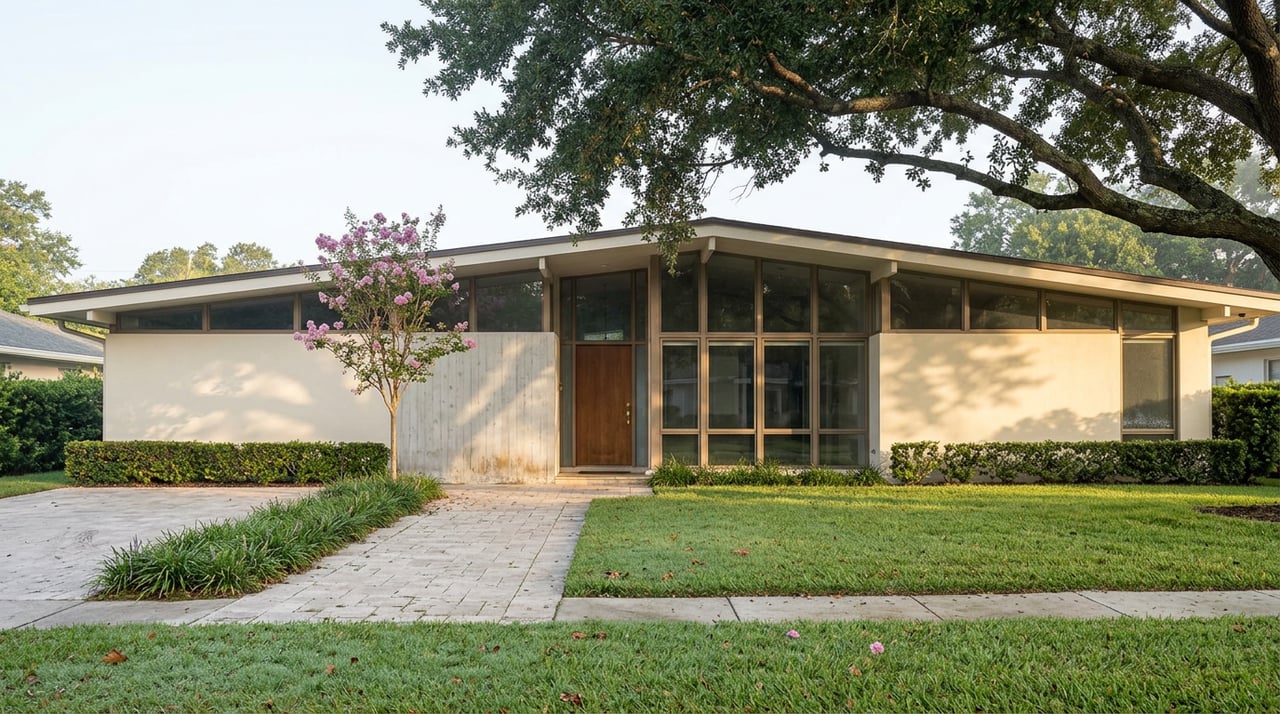
None of this changes what Pinecrest is at its core. The lot sizes, the mature oak canopy, the quiet residential streets that made the village a destination for families long before any of these restaurants existed, those haven't moved. What's changed is narrower and more specific: a stretch of South Dixie Highway that spent decades unable to physically accommodate the kind of restaurants a neighborhood this size should have finally found buildings that would let them in.
That's a real estate story wearing a food story's clothes. The next time a new name appears on that strip, the useful question isn't whether Pinecrest suddenly got trendy. It's what kind of space they found, and what that tells you about which parts of the corridor still have room left to fill.
If you're curious what any of this means for property values along that corridor, or you're weighing a move within the village yourself, Rebecca Sundel knows this stretch of South Dixie block by block. Reach out to request your home valuation and get a read on where Pinecrest's numbers actually stand today.