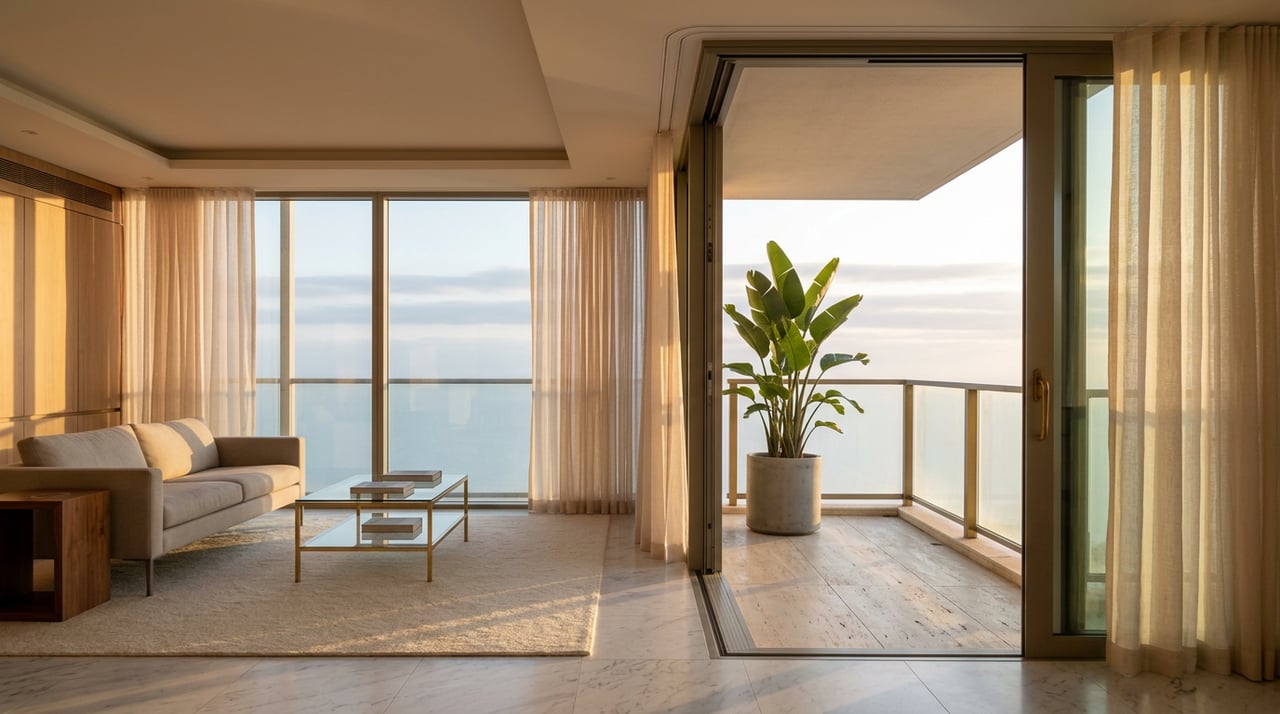
Pull up two one-bedroom listings in Brickell this week, both around 800 square feet, both a few blocks from the Metromover. One is priced near $500,000. The other is asking closer to $1.6 million. Same neighborhood. Same walk to Brickell City Centre. Same skyline view from the balcony, more or less. A buyer scrolling through both listings could be forgiven for assuming one is simply overpriced.
Neither is. They're two different products wearing the same zip code.
The blended number is hiding the split
Brickell's headline market stats this year describe a single, softening condo market. As of September 11, 2026, the neighborhood carried 1,071 active condo and townhouse listings, translating to roughly 17 months of supply, a level that firmly favors buyers over sellers. Days on market have stretched into the four-month range for much of 2026, and a large share of recorded sales have closed below the original asking price.
That's a real trend, and it matters if you're negotiating. But it's also an average, and averages in Brickell are doing a lot of work to disguise two markets that behave nothing alike.
One tier is resale inventory in buildings that opened in the 1980s and 1990s, pricing in roughly the $650 to $770 per square foot range for most of 2026. The other is branded, ground-up construction from names like St. Regis Residences, Cipriani Residences, Baccarat Residences, Aston Martin Residences, Mandarin Oriental Residences at Brickell Key and 888 Brickell by Dolce & Gabbana, pricing above $2,000 and often past $2,500 per square foot. Even within a single block, pricing can shift two to three times over depending on which of these two worlds a building sits in.
The soft, buyer-friendly conditions everyone's reading about are concentrated almost entirely in the first tier. The second tier is still absorbing new contracts at record price points. A $31 million penthouse listed at Una Residences this month, complete with its own rooftop pool, is evidence the top of the market hasn't slowed down at all. It's the middle of the resale stack that's carrying the inventory glut.
What's actually driving the split
The mechanism isn't taste or amenities. It's a state law that took effect in direct response to the 2021 Champlain Towers South collapse in Surfside.
Florida's milestone inspection statute, codified at 553.899, requires any condominium building three stories or taller to undergo a structural inspection by a licensed engineer once it reaches 25 years of age if it sits within three miles of the coast, or 30 years everywhere else, and every ten years after that. Alongside it, the Structural Integrity Reserve Study law now requires associations to fully fund reserves for eight specific structural components: roof, load bearing walls, fireproofing, plumbing, electrical, waterproofing, windows and exterior doors, and any other item with a deferred maintenance cost over $10,000. Boards could no longer vote to waive reserves for these categories once budgets adopted after December 31, 2024 took effect, and full funding became mandatory starting January 1, 2026. You can read the requirements directly on the state's own condominium information portal.
For a tower built in Brickell in the late 1980s or early 1990s, that's three decades of deferred structural funding suddenly due all at once. For a building delivering in 2026 or 2027, the reserve account starts at zero liability because there's no backlog to catch up on.
Two tiers, side by side
| Resale tier (pre-1995 towers) | New construction / branded tier | |
|---|---|---|
| Typical price | roughly $650 to $770 per sq ft | roughly $2,000 to $2,600+ per sq ft |
| Reserve position | catching up on decades of deferred structural funding | funding starts at zero, current code |
| Assessment exposure | minor remediation runs $5,000 to $15,000 per unit; buildings needing concrete restoration, waterproofing or roof replacement have seen $30,000 to $75,000 per unit; a handful of larger Brickell and Edgewater towers with multiple systems needing work at once have crossed $100,000 per unit | none inherited; buyer pays a premium instead of a catch-up bill |
| Financing | lenders now require a full review of the association's budget, reserves, delinquency data and insurance before approving a loan, which slows or blocks financing in buildings with weak reserve documentation | typically cleaner underwriting given new reserve studies and current-code construction |
What this means when you're comparing two listings
A buyer looking only at price per square foot will consistently misread this market. A resale unit priced 40 percent below a branded new building next door isn't automatically the better deal. If that resale building hasn't completed its milestone inspection, or if its reserve study shows a funding gap, the discount can be smaller than it looks once you price in a pending or likely special assessment.
The math works the other way too. Monthly HOA fees in Brickell generally run $0.80 to $2.50 per square foot, so a 1,000 square foot unit can carry anywhere from $800 to $2,500 a month before the mortgage payment even enters the picture. A building with a fully funded reserve and a clean recent inspection may sit at the higher end of that HOA range and still be the cheaper long-term hold, because there's no six-figure surprise waiting in the board minutes.
The practical move is to request three documents before writing an offer, not after: the most recent Structural Integrity Reserve Study, the milestone inspection report if the building has reached the 25 or 30 year threshold, and a written disclosure of any current, pending or anticipated special assessments. Ask for these in your initial inquiry. A seller or listing agent who can't produce them within a few business days is telling you something about the building's financial condition, whether or not anyone says it out loud.
A few questions worth asking directly
Does a lower price per square foot always mean a better deal in Brickell? Not on its own. Compare the price against the building's reserve funding status and assessment history. A cheaper unit in a building facing a pending six-figure assessment can cost more over three years than a pricier unit in a fully funded building.
How do I find out if a building has completed its milestone inspection? The association is required to share inspection results with unit owners, and buyers can request a copy through the seller during due diligence. The state's condominium division also maintains inspection and reserve study reporting requirements that associations must meet.
Should I avoid every pre-1995 Brickell building? No. Plenty of older towers have already completed inspections, funded their reserves properly, and priced their assessments into the sale. The building's paperwork, not its birth year alone, tells you which category it falls into.
Where this leaves you
Brickell's market right now rewards buyers who read past the median. The neighborhood isn't uniformly soft or uniformly strong. It's split along a fault line drawn by a state law most listing photos don't mention, and the split is wide enough to change what a fair price actually looks like for two units that appear nearly identical online.
If you're comparing Brickell buildings and want a second set of eyes on a specific building's reserve position, assessment history, or where it sits relative to its milestone inspection deadline, Rebecca Sundel can walk through the paperwork with you before you write an offer, not after.