If you are torn between a brand-new home and a resale property in Pinecrest, you are not alone. This is one of the biggest questions buyers face here because Pinecrest offers both modern estate homes and older properties on beautifully established lots. The good news is that you do not have to guess. With the right local lens, you can compare your options clearly and choose the home that fits your timing, lifestyle, and long-term plans. Let’s dive in.
Pinecrest Market Snapshot
Pinecrest has a distinct residential character that still traces back to its major growth period in the 1950s and 1960s. The Village describes that era as the foundation of Pinecrest’s ranch-style homes on acre lots, which helped create the lush, spacious feel many buyers still want today.
That history matters because it helps explain why both land and landscaping play such a big role in value here. In Pinecrest, you are often comparing more than the house itself. You are also comparing lot size, mature trees, outdoor potential, and the overall setting.
Current listing platforms point to a high-end market with enough inventory to make a thoughtful decision. Redfin reports 161 homes for sale, Zillow showed 139 active listings as of March 31, 2026, and Realtor.com reported 188 homes for sale. The exact counts vary by platform, but the broader takeaway is consistent: you likely have room to compare options instead of rushing.
Redfin also reported a March 2026 median sale price of $2.17 million and an average of 101 days on market. That pace suggests many buyers can take a more deliberate approach when weighing new construction against resale.
What New Construction Looks Like in Pinecrest
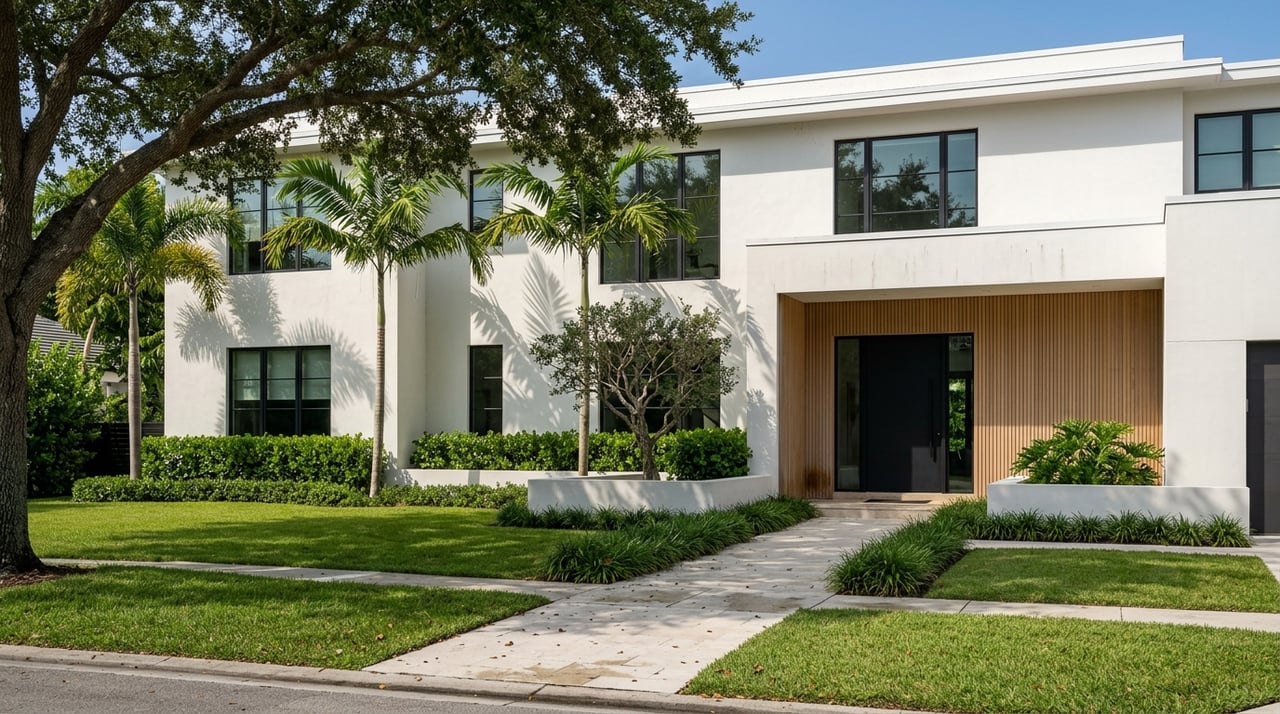
In Pinecrest, new construction is not mostly entry-level inventory or small-lot infill. Today’s new homes are largely custom estate properties built on generous parcels, often with large indoor-outdoor living spaces and luxury finishes.
Active examples on Redfin include a 2025-built home with 6,023 square feet on a 30,492-square-foot lot listed at $7.2 million, a 1.06-acre estate listed at $16.25 million, and a modern estate on a 37,853-square-foot lot listed at $7.175 million with a detached VIP suite and private gym. These listings point to a clear pattern: Pinecrest new construction tends to target buyers looking for large-scale, high-design living.
Why Buyers Choose New Construction
The biggest appeal is simple. You get a modern layout, newer systems, and typically fewer immediate maintenance concerns.
If you want open sightlines, contemporary kitchens, large primary suites, and seamless outdoor entertaining space, new construction can feel like the more natural fit. It may also give you more control over finishes, features, or add-ons depending on the stage of the project.
For many buyers, that cleaner starting point is worth the premium. You are not inheriting older design decisions, and you may avoid the near-term repair list that sometimes comes with an older home.
What to Watch With New Construction
In Pinecrest, timelines are a major factor. Realtor.com notes that new construction can involve longer timelines than existing homes, and local permitting can extend that process further.
The Village requires separate applications for grading, demolition, mechanical, electrical, plumbing, and general building permits, along with site-plan review and inspections. If a project involves tree removal or relocation, a separate tree permit is also required. Since Pinecrest prioritizes canopy preservation, that is not a small detail.
Floodplain review is another practical consideration. The Village participates in the National Flood Insurance Program and reviews new-construction plans for compliance with floodplain requirements, so drainage, elevation, and insurance questions should be part of your due diligence early on.
What Resale Homes Look Like in Pinecrest
Resale homes in Pinecrest span a much wider range of style, age, and condition. That variety is part of the appeal.
A resale home here might be a renovated 1950s property with a fresh contemporary feel, a 1990s Mediterranean estate, or a 2000s-era home with expansive living space and mature landscaping. In other words, resale does not automatically mean outdated, and new does not automatically mean better for every buyer.
Redfin examples show this range clearly. Current listings include a fully renovated 1957 contemporary estate on a 0.62-acre lot at $3.75 million, a 1997 Mediterranean residence on 0.88 acres at $3.999 million, and a 2004 Mediterranean estate on 1.16 acres.
Why Buyers Choose Resale
The strongest advantage is speed. Existing homes often offer quicker move-in and a more established setting.
That can be especially valuable if you want to settle into Pinecrest without waiting through planning, permitting, or construction. You can also see the lot, streetscape, landscaping, and surrounding context exactly as they exist today, which makes the decision feel more tangible.
Many resale homes also come with meaningful upgrades already completed. Current listings show features such as impact windows, solar panels, generators, and renovated kitchens, so age alone does not tell you how functional or move-in ready a home will be.
What to Watch With Resale
The main caution is to look beyond the surface. A beautiful renovation is only part of the story.
Pinecrest’s permit FAQ states that a permit is the official approval confirming code compliance, and the Village requires permits for major trades and other work. If a resale home has been significantly updated, you will want to verify the permit history of that work.
You should also think carefully about layout. Some older homes sit on fantastic lots but may still reflect an earlier era of room flow or ceiling height unless they were extensively reworked.
New Construction vs Resale in Pinecrest
When you compare the two side by side, the decision usually comes down to timing, project tolerance, and how much control you want over the final product.
| Factor | New Construction | Resale Home |
|---|---|---|
| Layout | Typically modern and open | Varies by era and renovation |
| Maintenance | Usually fewer immediate issues | Depends on age and updates |
| Move-in Timing | Often longer due to review and construction | Usually faster |
| Lot Character | Can be strong, but depends on site | Often includes mature trees and established landscaping |
| Design Control | More potential control over finishes and features | Less control unless you renovate |
| Due Diligence Focus | Permits, floodplain compliance, tree rules, timeline | Permit history, condition, layout, prior upgrades |
This is why a simple “new versus old” comparison does not tell the whole story in Pinecrest. Here, the lot and setting often matter just as much as the year built.
Price Per Square Foot Is Not the Whole Story
One of the most useful Pinecrest-specific takeaways is that price per square foot is not purely about age. Finish level, lot quality, condition, and location can all move the number.
The research examples make that clear. One 2025-built home is listed at about $1,195 per square foot, a 1997 Mediterranean resale is listed at about $826 per square foot, and a fully renovated 1957 contemporary resale is listed at about $1,175 per square foot.
That spread shows why buyers should avoid overly simple assumptions. A renovated resale on a strong lot can compete closely with new construction pricing, especially when design quality and outdoor setting are part of the package.
Key Questions to Ask Before You Decide
Will the Lot Fit Your Vision?
In Pinecrest, the lot is a major part of the decision. Current examples range from about 0.6 acres to more than 1 acre, but each parcel needs to be evaluated on its own.
If you want a pool, guest space, outdoor kitchen, large lawn, or expanded entertaining area, make sure the site truly supports that plan. A house can be renovated or rebuilt, but the lot sets the framework.
Will Tree Preservation Affect Plans?
This is a very Pinecrest-specific issue. The Village requires permits for many tree removals or relocations, and canopy protection is a clear community priority.
If you are considering a teardown, major addition, or even a redesigned outdoor program, tree rules may affect your options, timeline, and budget. That should be part of your planning from day one.
How Fast Do You Need to Move?
If your timing is tight, resale may be the more practical path. Existing homes often allow for faster occupancy, while new construction can take longer because of permitting, inspections, and sequencing.
Redfin reports homes averaging 101 days on market, and its new-homes page shows many new homes around 105 days on market. That slower pace can help you compare choices carefully, but it does not erase the fact that building timelines can stretch.
Is Flood and Drainage Part of the Decision?
Yes, especially for new construction. The Village reviews new-construction plans for floodplain compliance, so elevation, drainage, and insurance should be discussed early.
This is not just a box to check. It can shape site selection, design decisions, and your ownership costs over time.
Which Option Makes More Sense for You?
Choose new construction if your top priorities are a modern layout, fewer immediate maintenance needs, and more control over the finished product. This path tends to suit buyers who want a polished, contemporary home and are comfortable with a longer runway.
Choose resale if your top priorities are quicker move-in, mature landscaping, and the character of an established Pinecrest setting. This option often works best if you want to evaluate the lot and neighborhood context in real time and avoid the uncertainty of a longer build process.
In Pinecrest, the best choice is usually the one that matches your lifestyle, timeline, and comfort with complexity. A newer home may give you convenience and design clarity, while a resale home may give you land value, canopy, and a more immediate sense of place.
If you are weighing both paths in Pinecrest, working with someone who understands the local inventory, property context, and decision points can make the process much clearer. For tailored guidance on Pinecrest homes, connect with Rebecca Sundel for a thoughtful, high-touch buying strategy.
FAQs
Should you choose new construction or resale in Pinecrest?
- Choose new construction if you want a modern layout, lower immediate maintenance, and more design control. Choose resale if you value quicker move-in, mature landscaping, and an established Pinecrest setting.
Are new construction homes in Pinecrest mostly luxury estates?
- Yes. Current new-construction inventory highlighted in the research is concentrated in large-lot custom estate homes with high-end finishes and expansive indoor-outdoor layouts.
Do resale homes in Pinecrest always need renovation?
- No. Pinecrest resale inventory includes a wide range of homes, including fully renovated properties with updated kitchens, impact windows, solar panels, and generators.
Do Pinecrest tree rules matter when buying a home?
- Yes. Pinecrest requires permits for many tree removals or relocations, and tree preservation is a community priority, which can affect renovation or rebuild plans.
Do Pinecrest permits matter when evaluating a resale home?
- Yes. If prior work was completed on a resale home, you should verify permit history because permits confirm official approval and code compliance.
Does floodplain review matter for Pinecrest new construction?
- Yes. The Village reviews new-construction plans for floodplain compliance, so drainage, elevation, and insurance should be part of your due diligence.