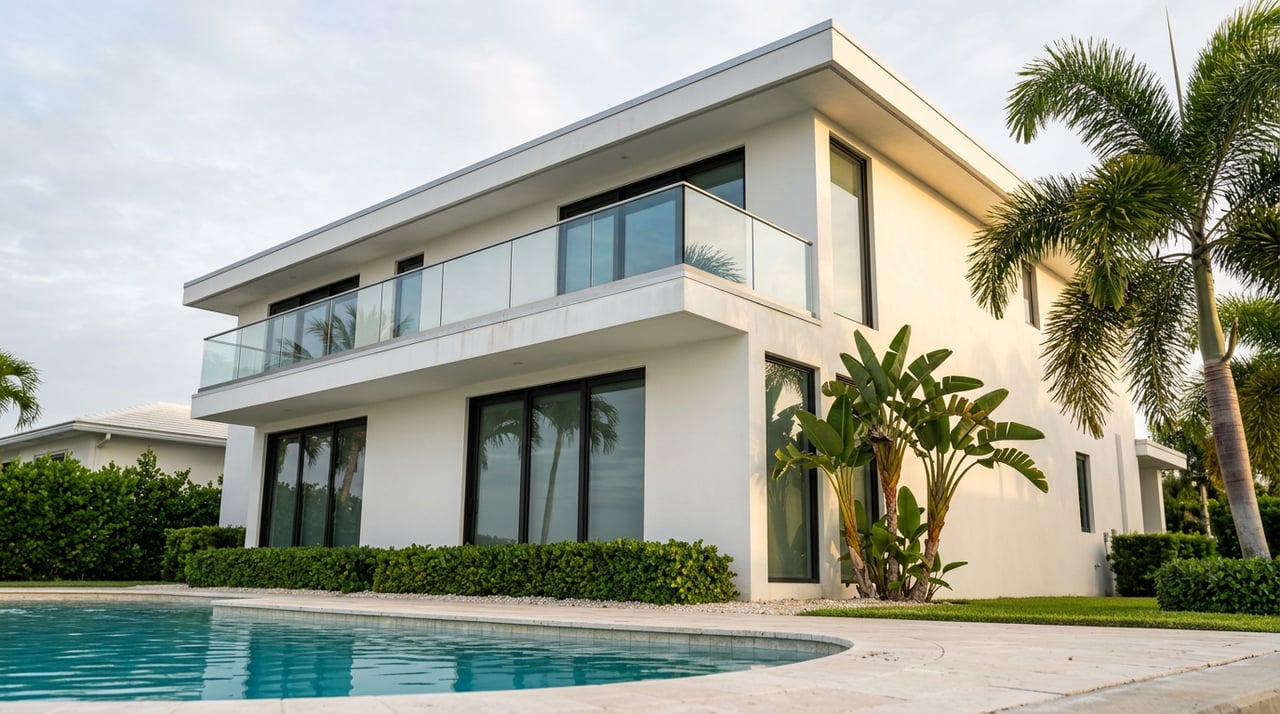
A buyer moving down from the Northeast found the house first, a canal-front three-bedroom in Rio Vista with a covered dock and just enough backyard for the boat she'd been dreaming about since she started house hunting online. She went under contract fast. During her inspection week, almost as an afterthought, she called the city to confirm the fixed bridge clearance on her canal before she committed to a boat lift. The answer came back: about 15 feet at mean high water, common on older Fort Lauderdale canal infrastructure. Her flybridge sport fisher would not clear it. The house was still a good house. The lifestyle she'd pictured wasn't the one that came with it.
That kind of detail never shows up in a listing description, and it almost never shows up in a market report either. It's the sort of thing you only discover mid-transaction, which is exactly why it matters more than most of what gets published about Fort Lauderdale real estate.
The median price can't agree with itself
If you've already looked at a few market trackers, you may have noticed they don't tell the same story. One tracker's three-month window ending in June 2026 put the median sale price near $580,000, up more than 10 percent year over year. A different live feed, refreshed in mid-August 2026, put the median closer to $492,500, down slightly from a year earlier. A third source's first-quarter 2026 numbers split it further: houses at roughly $605,000 and climbing, condos flat around $412,000.
None of these sources is wrong. They're measuring different slices of the same city at different moments, and that's the point. A single median for "Fort Lauderdale homes" is blending single-family houses with condos, inland lots with canal frontage, and homes with wildly different insurance and maintenance profiles into one number. With more than 165 miles of navigable waterways running through the city, from canals and rivers to bays and the Intracoastal Waterway, water access here isn't a niche upgrade the way it might be inland. It's a defining variable that the median flattens out of view.
If you're comparing neighborhoods with a waterfront home in mind, the median is a starting point, not an answer. The real comparison happens one tier down, at the level of what kind of water you're actually buying next to.
Three tiers of water, three tiers of cost
Fort Lauderdale waterfront breaks into three broad categories, and each one carries its own insurance math:
| Water type | Typical combined homeowners + wind insurance | Added flood insurance |
|---|---|---|
| Canal-front | roughly $8,000–$20,000/year | $1,500–$8,000/year depending on elevation and FEMA zone |
| Intracoastal | roughly $12,000–$30,000/year | $1,500–$8,000/year depending on elevation and FEMA zone |
| Oceanfront | roughly $18,000–$50,000+/year | $1,500–$8,000/year depending on elevation and FEMA zone |
Stack those together on a mid-size waterfront purchase and the carrying cost difference between a canal lot and an oceanfront estate can run into the tens of thousands of dollars a year, before you've spent a dollar on the mortgage. On a $3 million canal home, combined flood and wind coverage alone can add $15,000 to $25,000 annually, which is enough to change what a buyer can comfortably qualify for.
This sits on top of an already elevated statewide baseline. As of August 2026, homeowners insurance in Florida averages $10,384 a year statewide, and independent Fort Lauderdale agencies routinely quote $6,000 to $12,000 a year as typical for coastal properties even before flood coverage enters the picture. Waterfront doesn't just add a premium to that number. It multiplies the variables that determine it.
The label matters less than the elevation certificate
Here's the part that surprises even buyers who've done their homework: the water-type label is not the strongest predictor of your bill. Two canal-front homes on the same block, even the same street, can carry meaningfully different premiums depending on the property's elevation certificate, construction year, and roof condition. A canal home built to modern hurricane standards on a slightly higher lot can insure for less than an older Intracoastal home sitting a few feet lower, even though the Intracoastal address reads as the more prestigious water type.
Under the National Flood Insurance Program's current Risk Rating 2.0 approach, premiums are calculated from individual property characteristics rather than the flood zone alone. That means the FEMA zone on the listing sheet tells you less than the elevation survey does. If you're comparing two similarly priced waterfront homes, ask for the elevation certificate before you ask about the view. It will tell you more about your actual annual cost than the water type will.
The cost line that isn't on the listing sheet
Insurance gets the attention because it shows up every year on a bill. Seawalls get less attention because they show up rarely, and expensively, when they do. A full seawall replacement in the Fort Lauderdale and Broward waterfront corridor can run $20,000 to $60,000 or more, and salt air shortens maintenance cycles on structure, finishes, and mechanical systems compared with an inland property of the same age. A seawall inspection before closing isn't a formality here. It's the difference between a maintenance item you can plan for and a five-figure surprise in year two.
What the water actually is, by neighborhood
Not every part of Fort Lauderdale's waterfront means the same thing, which is part of why grouping it all under one heading obscures more than it reveals:
- Rio Vista and Idlewyld sit close to downtown with deep-water canal lots, popular with boat owners who want quick access without the oceanfront premium.
- Coral Ridge and Las Olas Isles run on a canal grid, with lot-by-lot variation in bridge clearance and dock depth that's worth confirming before you assume your boat fits.
- Imperial Point offers canal-front single-family homes with direct Intracoastal access, a middle tier between canal pricing and Intracoastal pricing that's easy to overlook if you're only filtering listings by "waterfront."
- Harbor Beach is the city's oceanfront estate enclave, where insurance sits at the top of the range described above in exchange for direct beach and ocean access.
Two of these can look nearly identical in a listing photo and cost thousands of dollars apart to carry for a decade.
What this means if you're comparing neighborhoods
If you're relocating and evaluating Fort Lauderdale against other South Florida markets, the practical move is to stop treating "waterfront" as a single filter. Before you write an offer:
- Ask for the elevation certificate, not just the FEMA flood zone designation.
- Get an insurance quote on the specific address, not a neighborhood estimate, since two homes a block apart can price differently.
- If a boat is part of the plan, confirm fixed bridge clearance with the city before you assume access.
- Ask when the seawall was last inspected and whether replacement has been discussed in HOA or neighborhood records.
None of this shows up in a median price. All of it shows up in your first insurance renewal.
A few questions worth asking directly
Does canal-front always cost less to insure than Intracoastal or oceanfront? Usually, but not always. Elevation and construction year can outweigh the water-type category, so a well-elevated canal home can occasionally cost more to insure than an older, lower Intracoastal property.
Is flood insurance mandatory on every waterfront home here? It's required for federally backed mortgages on homes in FEMA high-risk zones. Many buyers carry it even outside those zones given how much of Fort Lauderdale sits close to sea level.
How do I find out if my boat will clear a canal's bridges before I make an offer? Contact the City of Fort Lauderdale directly for bridge clearance data rather than relying on a listing description. Older infrastructure commonly clears around 15 feet at mean high water, and that number catches buyers off guard more often than any other line item in this guide.
The purchase price gets all the attention because it's the number you can look up. The real cost of Fort Lauderdale waterfront living gets decided by elevation surveys, bridge clearances, and seawall reports that never make it into a listing photo. If you're comparing neighborhoods and want the actual carrying-cost math run on specific addresses rather than category averages, I'm happy to walk through it with you. And if you already own waterfront here and are curious what this market's fragmentation means for your own equity, Rebecca Sundel can put together a home valuation that accounts for exactly the variables this piece covers.