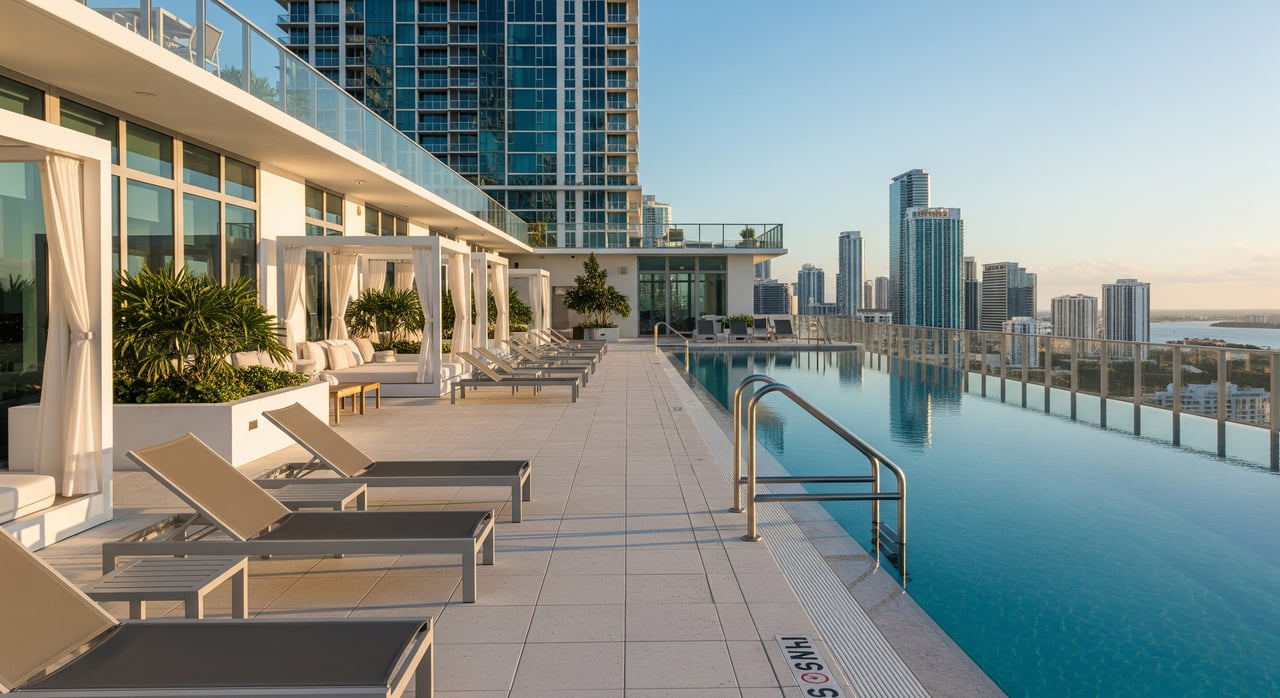
Do you ever wonder if that shiny rooftop pool is worth the monthly dues? Choosing between Brickell and Downtown often comes down to what you pay each month versus what you truly use. You want a location that fits your lifestyle and a building that makes sense for your budget. In this guide, you’ll see how fees work, which amenities drive costs, and how Brickell and Downtown compare so you can buy with confidence. Let’s dive in.
Brickell vs Downtown snapshot
Brickell context
Brickell is Miami’s financial hub with a dense stretch of newer luxury towers. Many buildings feature resort-style amenities like 24/7 concierge, valet, multiple pools, and spa-level wellness spaces. That high service level often translates to higher monthly condo fees on a per-unit or per-square-foot basis. Walkability, transit access, and a lively after-work scene make it a favorite for professionals who value convenience.
Downtown context
Downtown is the cultural and civic core with museums, parks, and arenas. You’ll find a wider mix of building ages, from older mid-rises with simpler amenities to new towers that rival Brickell’s luxury. Older buildings often come with more modest fees, while newer Downtown towers can match Brickell-level dues. The vibe leans more arts and civic-focused with easy access to Bayfront and Museum Park.
What condo fees cover
Core inclusions
In Miami, condo fees typically cover exterior and common-area maintenance, staffing, elevators, landscaping, and utilities for shared spaces. Associations often include trash removal and may bundle cable or internet through bulk contracts. Building insurance for the structure is a major line item, along with management, legal, accounting, and contributions to reserves. Your exact inclusions vary by building, so review the association’s budget and what your fee includes.
Why fees vary most
Several factors move the needle on dues:
- Amenity intensity, like multiple pools, spa, valet, and extensive elevators.
- Building age and condition, which can mean larger reserves or upcoming capital work.
- Insurance costs and deductibles tied to regional weather risk.
- Staffing levels, particularly 24/7 concierge and security.
- Utilities included in dues, such as water or cable.
- Parking structure and valet operations.
Typical fee ranges today
Fees in Brickell and Downtown vary widely by building, size, and services. Older Downtown buildings with basic amenities often come in on the lower end, sometimes several hundred dollars per month for a one-bedroom. Newer Brickell luxury towers with full-service amenities frequently land in the higher range, often many hundreds to over a thousand dollars per month for a smaller unit. New Downtown luxury towers can match Brickell pricing when amenities are comparable. Always verify exact amounts in the association’s documents.
Amenity levels compared
Basic amenities
- Typical in older Downtown buildings.
- Pool, small gym, community room, and assigned parking.
- Lower fees and fewer staff. You trade resort services for a lower monthly carry.
Mid-tier amenities
- Common in many newer Downtown and mid-range Brickell buildings.
- Larger fitness centers, one resort-style pool, lounges, limited-hours concierge, and pet areas.
- Moderate fees with a balanced mix of convenience and cost.
Full-service amenities
- Typical of luxury Brickell towers and high-end Downtown buildings.
- Multiple pools, 24/7 concierge and valet, spa, private dining or lounges, coworking, kids’ rooms, and sometimes marina access.
- Highest fees due to staffing, maintenance, insurance, and complex systems.
Lifestyle tradeoffs that matter
Walkability and vibe
Brickell puts you steps from restaurants, bars, and retail hubs like Brickell City Centre and Mary Brickell Village. Downtown brings you closer to cultural venues and bayfront parks. If you want a corporate-resort feel, Brickell often delivers. If you prefer museums and events, Downtown may fit better.
Commute and transit
Both areas are well-served by Metromover and nearby rail. Brickell is ideal if you work in nearby office towers and want minimal commute time. Downtown suits those who prioritize civic and cultural access. If you plan to be car-light, both can work depending on your daily routine.
Noise and events
Brickell’s nightlife can bring evening energy and street activity. Downtown experiences event-night spikes near arenas and venues. Building orientation and construction type affect acoustics, so tour at different times of day.
Views and orientation
Water and skyline views often increase both purchase price and allocated maintenance shares. Brickell offers bay, river, and skyline vistas; Downtown offers bayfront outlooks and park proximity. If a view is a must-have, be prepared for a higher fee allocation in some associations.
Parking and car ownership
Luxury Brickell buildings often include valet or structured parking, sometimes with separate fees. Older Downtown buildings may have limited or deeded parking. If you do not need a car, transit access could offset parking costs.
Rental and investment rules
Both neighborhoods see investor interest, but short-term rental policies depend on city and association rules. Always verify current municipal regulations, association documents, and any deed restrictions before modeling rental income.
Which neighborhood fits you?
- You prioritize daily convenience, on-site services, and social amenities. Brickell’s full-service towers may be worth the higher monthly dues if you will use the concierge, pools, and wellness spaces often.
- You want central access with lower carrying costs. An older Downtown building with a basic amenity set can free up monthly cash flow, with the tradeoff of fewer luxury services.
Example profiles:
- Caroline, 32, financial analyst: She values walkability to the office, time-saving concierge services, and active social spaces. She accepts higher Brickell fees for the convenience.
- Marco, 36, creative professional: He prefers access to museums, parks, and a lower monthly budget. An older Downtown building with a pool and gym fits his lifestyle.
How to compare two buildings
Quick screening test
- List your top three must-have amenities, such as 24/7 security, a real gym, or a dedicated workspace.
- List your top three must-not-have fee drivers, such as required valet, multiple pools you will not use, or large gaps in reserves.
- Screen listings against these lists before touring.
Due diligence checklist
Request these items before you make an offer or during your inspection period:
- Current budget plus the last 2–3 years of budgets.
- Most recent reserve study and contribution schedule.
- Minutes from the last 12 months of board meetings.
- Insurance certificates and deductible details; clarify owner responsibilities.
- Management contract and fee structure.
- Itemized monthly dues and inclusions, including utilities, parking, and storage.
- Rules on pets, leasing, and short-term rentals.
- Capital project history and timelines for upcoming work.
- Litigation disclosures and outstanding judgments.
- Estoppel letter confirming current dues and any pending assessments.
Red flags and green flags
- Red flags: repeated special assessments without a long-term plan, aging mechanical systems with no reserve strategy, or unclear insurance coverage and deductibles.
- Green flags: timely reserve studies, transparent meeting minutes, clear plans for capital work, and stable insurance arrangements.
Final take
Brickell often trades higher monthly dues for resort-level convenience and proximity to major office towers. Downtown offers a wide spectrum, from budget-friendly older buildings to luxury towers that mirror Brickell’s amenity packages. The right choice depends on how you live day to day, which services you will use, and how much predictability you want in your monthly carrying cost.
If you want a clear, side-by-side look at specific buildings, current budgets, and amenity tradeoffs, reach out to Rebecca Sundel for tailored guidance and on-the-ground expertise.
FAQs
How do Brickell and Downtown HOA fees compare on average?
- Brickell fees tend to run higher due to newer, full-service buildings, while Downtown spans a wider range from modest older condos to luxury towers that can match Brickell.
What amenities raise condo fees most in Miami high-rises?
- Multiple pools, 24/7 concierge and security, valet parking, spa facilities, extensive elevator banks, and large common spaces are the biggest cost drivers.
Are utilities and parking usually included in Miami condo dues?
- It depends on the building; water and basic cable or internet may be included, while parking and valet can be separate or structured differently by building.
How is Florida’s insurance market affecting HOA fees in Brickell and Downtown?
- Higher building insurance premiums and changing deductibles have pushed costs up for many associations, with the impact varying by building and policy.
Should I choose lower dues with fewer amenities or pay for full service?
- Choose the option you will actually use; if concierge, valet, and multiple pools save you time and add daily value, higher dues may be justified, otherwise a simpler building can free up cash flow.
How can I spot potential special assessments before buying in Brickell or Downtown?
- Review the reserve study, recent budgets, and board minutes for upcoming capital work, and request the estoppel letter to confirm any pending or planned assessments.
What are the short-term rental rules in Brickell and Downtown Miami?
- Rules vary by city regulations and association bylaws; verify current municipal policies, the condo’s rental rules, and any deed restrictions before relying on rental income.